C2C—Le Banquet Historical Clips Rundown

One of my true musical highlights this year or so has been Tetra, a late 2012 album from French turntable/beat group C2C.  If you’ve raced at all in the ECCC in 2013, you’ve heard them, clearly enjoyed it, and tragically just not known it.  Anyway, almost all of Tetra is good, but a number of tracks are excellent.  My favorite is Le Banquet.  There’s no official video yet, but there are a number of clip compilations on YouTube.  Among the better done is a Marvel mashup, but a Snatch extract is actually probably the most compelling of these.  Among these options though I find it actually more interesting with just the audio:

In any event, the primary lyrics of the song are actually spoken word sound samples.  Some of them are fairly immediately identifiable as actual recordings of speeches from historical figures.  Assuming—probably incorrectly—that they were all historical, I went looking to try and figure out all of them.  I couldn’t find any list or extensive references online, so below I present most of the sources to Le Banquet, as best as I can assemble.

UPDATE: This blog post, though in French, also has a good rundown of the sources.

C2C

First, a minor digression to highlight some of the other excellent tracks from Tetra which have official videos.

I first heard of the group & the album via Down the Road, played at 3am on some college radio station along the I95 corridor.  The official video is quite good:

The Beat is also excellent, in both song and video:

Delta is pretty different, and has a cool sci-fi cartoon narrative video:

Taking the range even further, Happy is super different musically and has an accordingly different and great video, probably the best one due to the ongoing dance routine:

The Cell, Because of You, F.U.Y.A, Arcades (another actual video, not just music), and Who are You (another fairly different entry stylistically from the core beat tracks) are also standouts.  That’s 10 tracks out of 14 with the others not bad, so it’s a high-value album.

Full Lyrics

But, back to Le Banquet.  First, the full primary lyrics:

C2C—Le Banquet

We are going to begin to act
Beginning, today
To do whatever needs to be done
Let’s get on with the job

World has turned over many times
And it transformed the history of man
Either the will or the skill to fight
We are ready to take part
But now further direction is required
Tonight, the battle has been joined
We will not fail
Regrettably, we now believe that only force will make him leave

I just wanna say this right now
That regardless of what they say about it
There is nothing new, only different
Never forget this
The future is to those who take it
All I say that nothing is easy, and the best things are the hardest

That isn’t enough

It is madness

Some men see things as they are and say why
I dream things that never were and say why not

Epic battle has ended
Thank you, good night, and farewell

Sources

Now, a break down of the sources as best I’ve been able to ascertain them:

C2C—Le Banquet

We are going to begin to act
Beginning, today

<quote not contiguous>

To do whatever needs to be done

President Ronald Reagan’s first inaugural address, 1981.

Let’s get on with the job

I’m not confident in this as I couldn’t find a clip or script, but it’s possibly from the 1960 film Sink the Bismarck.  It is not from the Johnny Horton song of the same name despite the phrase appearing in there.

World has turned over many times

General Douglas MacArthur’s Farewell Address to Congress, 1951.

And it transformed the history of man

No idea.  My first guess was a Kennedy, but I’m less certain on listening more closely. UPDATE: This appears to be from a Kennedy speech on the Cuban Missile Crisis, 1962.

Either the will or the skill to fight

<quote not contiguous>

We are ready to take part

Secretary of State John Foster Dulles’ statement on the fall of Dien Bien Phu, 1954.

 But now further direction is required

President John F. Kennedy’s Report to the American People on the Soviet Arms Buildup in Cuba, 1962.

Tonight, the battle has been joined

<quote not contiguous>

We will not fail

<quote not contiguous>

Regrettably, we now believe that only force will make him leave

President George H. W. Bush Address to the Nation Announcing Allied Military Action in the Persian Gulf, 1991.

I just wanna say this right now
That regardless of what they say about it

Vice-presidential candidate Richard Nixon Checkers Speech, 1952.

There’s nothing new, only different

Unknown. UPDATE: This is from an Adlai Stevenson presidential campaign speech, 1952.

Never forget this
The future is to those who take it

The sample could definitely be from the song Press Forward (Interlude) by Swollen Member, on their Black Magic album, 2006 (Youtube recording).  I couldn’t surmise if they created it, or in turn sampled it from somewhere else.  One source that has marked other lyrics of theirs as samples does not indicate that for this song. UPDATE: This is from an Adlai Stevenson presidential campaign speech, 1952.

All I say is that nothing is easy, and the best things are the hardest
That isn’t enough

No idea. UPDATE: This is from an Adlai Stevenson presidential campaign speech, 1952.

It is madness

I’m skeptical, particularly as I couldn’t run down an audio clip or a transcript, but it’s possible this is either a sample or, much more likely within that possibility, just a reference to a George McGovern quote from a rally in 1969, “We must learn that it is madness, not security, to devote 70% of our controllable federal budget to armaments and only 11% to the quality of life.”

Less likely, President Dwight D. Eisenhower also has this phrase in his 1956 Address Accepting the Republican Presidential Nomination. UPDATE: Listening to the audio, I now believe this to be the reference.

Some men see things as they are and say why
I dream things that never were and say why not

Ted Kennedy paraphrasing and eulogizing his brother Robert F. Kennedy, 1968.  RFK was in turn paraphrasing the Serpent in George Bernard Shaw’s play Back to Methuselah, 1921.  John F Kennedy was also known to make this reference.

Epic battle has ended

Again Secretary of State John Foster Dulles’ statement on the fall of Dien Bien Phu, 1954.

Thank you, good night, and farewell

The voice sounds an awful lot like the same as Dulles’ in the line before (or, potentially, whoever is reading his samples), but I couldn’t find it in any transcriptions or clips.  However, this is also the closing line of Spiro Agnew’s resignation speech, 1973, so presumably that’s the source.

Closing

Any leads on the unknowns would be greatly appreciated, send ’em in!

tetra

40k: Redcap’s 1250pt Tournament

kingbreakers-iconRedcap’s December 40k tournament went off well yesterday, ten people attending.  The majority of armies were loyalist Marines, with a sprinkling of Chaos, Eldar, Tau, and Orks.  Colin’s Noise Marines wound up second, Brett’s Orks somewhere in the middle.  I only finished seventh, getting annihilated in the first game by Owen’s Blood Angels, which went on to win, and a closely fought but ultimately crushing loss to Jeremy’s Daemons in the third.

Benn and Adam have Redcap’s 40k tournaments super dialed at this point.  All the small but critical stuff a bunch of us have asked for over time, like posted  terrain specifications and tournament standings formulas, are all getting done, and notably lacking at other similar venues.  As always the missions are straight forward and well balanced, with a number of critical details from the book missions adjusted, like setting a fixed and even numbers of objectives where appropriate.  This diversity of nice looking, well playing tables also really demonstrated their excellent terrain collection, especially with a lot of very thematic setups.  I myself played in a French village, in a lush greenland canyon, and a parched, corrupted desert.  Other tables featured a snowy border checkpoint, ruined mega cathedral, and Imperial loading dock.  Pretty sweet!

Orks invading... no, running away from... an Imperial dockyard.

Orks invading… no, running away from… an Imperial dockyard.

More photos are in the Flickr gallery; I was able to get at least a few of most of the armies.

Army

In dropping my usual list(s) down to 1250 points I wound up with one that was built of my standard elements but felt very different overall:

  • Capt Angholan—Vulkan
  • Sternguard x5 w/ w/ 3x Combi-Meltas
  • Tacticals x10 w/ Razorback, Vet Sgt, Powerfist, Plasmagun, Missile Launcher
  • Tacticals x10 w/ Rhino, Vet Sgt, Melta Bombs, Meltagun, Missile Laucher
  • Devastators x5 w/ Vet Sgt, 2x Plasmacannons, 2x Heavy Bolters
  • Predators x2 w/ Autocannon, Heavy Bolter sponsons
  • Aegis Defense Line w/ Quad-gun

Notably missing are the Librarian, the Sternguard’s Drop Pod, my numerous Landspeeders, and fewer Troops than I usually run even at this point level.  From these changes it was much less alpha/early-strike oriented, and much less able to spam camp objectives.

It’s worth noting that all the games were played on 4×4 boards.

Round 1

First up was Purge the Alien against Owen’s Black Templars-disguised Blood Angels.  This was brutal.  To a large extent I think I was just rusty, not having played at all since last month’s Alternate Universes tournament and still being hesitant enough with 6th edition for that to have a big impact.  I could definitely tell the difference in my play between the 1st and 3rd rounds.

There were really two problems.  One was that my table side was dominated by two large impassable buildings, situated such that I only had two small pockets with clear firing lanes on opposite table edges to deploy into.  With my new gunline oriented army vibe this is a big problem.  I debated castling up behind the buildings almost entirely, but then I would have gotten only at best one round of shooting off before getting assaulted.  In the end my army wound up divided in half with two components relatively unable to support each other due to the terrain.  Owen was thus able to specifically pit his dudes against their best match in my army, e.g., keeping his Land Raider away from my Sternguard melta-bubble and crushing Tacticals on the other table edge.

Damn it, people, I said everybody better bring melta, *everybody*!

Damn it, people, I said everybody better bring melta, *everybody*!

The other issue was his army, essentially a tight, hard brick with only seven units.  Through the first couple turns the only things facing me were that Land Raider Redeemer, a Mortis Pattern Contemptor Dreadnought, a well hidden TL Lascannon Razorback, and some Scouts tucked away in his backfield.  That basically meant I was staring down AV 14, AV 13, and a serious cover save.  With just a few (combi-) meltas on hand, and none particularly mobile at that, the Land Raider was basically unstoppable.  The Contemptor similarly shrugged off what limited Str 7+ shooting I could apply to it, while it in turn rained down tons of high strength shots.

In fairly narrative fashion, the Contemptor climbed up into the top of a ruined steeple and began raining down high strength shots while the Land Raider drove itself like a wedge forward into one of my encampments under its baleful gaze.  A Reclusiarch and Death Company then piled out and annihilated what few Kingbreakers were left standing, turning this into a complete rout.

Hahaha, I will rule this world like a king!  LOLz!

Hahaha, I will rule this world like a king! LOLz!

Somewhat ironically, my traditional lists that I’ve been moving away from and left behind almost entirely this tournament would have been much better suited to this opponent.  Owen would be tough no matter what, and I could do better with this weekend’s list in a rematch when I’m less fuzzy, but this is basically exactly the opponent for which my Melta-Pod Sternguard/Landspeeder Multi-melta fleet/Vulkan re-roll army and aggresive, mobile play-style was designed.  Damn it!

Round 2

Next up was John, a new player, and his Dark Angels, in the Scouring.  To a large extent I had a number of significant lucky breaks go my way this game.  First, tragically for his entirely Deep Striking army, we wound up on a table with tons of rock columns.  I then won table edge selection and used that to fill up the single clear area on the entire board with all of my dudes.  No stranger to aggressive Drop Pod tactics myself, I was careful to leave almost no space for him to come down within my lines, and to have a lot of overlapping fire fields on anything that did land nearby.  The highest value objective also came up right in my ideal location.

Let's go this way!

Let’s go this way!

The terrain, my deployment, and bad scatter all worked to put his Drop Pods down in unfortunate locations.  His warlord Librarian and a Command Squad with Banner of Devastation were wiped out immediately after landing, having only managed to take out a Predator.  In the final substantial lucky break for me, one of his two teleporting Terminator squads mishapped itself out of the game.

Supported by my firebase and with a large portion of his army out unduly early, I was able to spread pretty thinly, with a Combat Squad on one objective, a Tactical Rhino advancing to another, Sternguard eventually running to and clearing one of the Dark Angels’, and Capt Angholan + Squad Scolirus wiping out another DA squad to claim a third objective and a crushing victory.

Though they didn’t last long enough to have a ton of impact, I did like John’s Command Squad fielding multiple meltaguns and a Banner of Devastation.  At some point I expect to start fielding a Kingbreakers Command, it’s almost definitely become a worthwhile & efficient unit this edition.

Noooope, can't get out that way.

Noooope, can’t get out that way.

One very interesting thing that happened in this game was that I actually wound up boxed out in deploying my three objectives.  Between me placing two in my quarter (Vanguard Strike deployment) and John running his across the center diagonal, the geometry worked out that I could not put my third anywhere near my dudes and had to put it in his table half.  Granted, by necessity that means one of his was not too far from my corner, but I was a bit flummoxed for a moment.  I don’t think I’ve ever had that really happen before, an unanticipated consequence of the small 4×4 tables and large number of objectives (6) that I should have anticipated better.

Round 3

Finally I faced Jeremy and his Chaos Daemons in Big Guns Never Tire.  His army is hilarious, in a positive way, because it consists entirely of 6 units: 4 big daemons, and 2 groups of 10 little daemons.  It’s just funny to look around at the various hordes and fleets of flyers and big vehicles… and then see his force very neatly arranged onto an 8.5×11 sheet of paper.

CHAAAAOOOSSSSSSSS!!!

CHAAAAOOOSSSSSSSS!!!

Deployment

I put one objective deep in a corner and he did the same across the table, probably meaning that I would have had to go straight through his heavy hitters to get to it, rather than flanking around like I would hope.  My second also went along my back edge reasonably close to the first, and he put his second at table center, conveniently enough in the middle of a Chaos Shrine offering improved invulnerable and cover saves to the Daemons.

I gave him first turn, thinking otherwise he’d just deploy entirely into reserve and leave me nothing to shoot at.  Some plaguebearers camped out in a ruin around the Chaos backfield objective and basically removed themselves entirely from the game at that point.  Certainly the Kingbreakers never got over there to ask what they were doing or if we could have the objective instead.  The Khorne Prince and two generic Princes then set up a flying vanguard phalanx at table center in front of a Keeper of Secrets.

Let's do this thing.

Let’s do this thing.

Kingbreakers took a few risks in deployment.  Unusually for me, I broke both Tacticals into Combat Squads, on the theory that:

  • Daemons would eat them in assault no matter how big the squads were;
  • One each could then be used as a speed bump, sacrificing itself to keep bad guys away from its partner on an objective for another turn;
  • One would then be able to fire at a daemon and force a grounding check, hopefully enabling the other with a heavy weapon to fire at full effect.

Contrary to the lessons of the first round and my usual preferences for large self-supporting groups, I also broke the army into three groups.  Sternguard, Tacticals, and a Predator camped out in an Aegis encirclement around one objective.  Devastators and the second Predator camped out on the opposite table edge.  Angholan and Tacticals prepared to move toward the center objective, leaving behind a Combat Squad on another.  The main rational was that on a 4×4 table and very clear board with broad sightlines, my relatively large number of 36″ weapons would still be able to support each other all across the back edge, which turned out to be largely true.

Early goings.

Early goings.

Fight!

Those overlapping fire fields then went to work on the daemons as they flitted about.  One generic Prince went down immediately, though he would later make a brief reappearance via Warp Tether.  The Predators both went down and various Marines got Vector Striked, but the two fire camps did a good job at taking down the Khorne and generic Princes that split up to go after them.

In the midst of and following that, the center field featured extended tight action with the Keeper of Secrets.  Angholan was deceived by its tricksy ways and rolled four 1s on his buffed out 2+/3++ to die immediately in combat with the beast.  Tacticals strove bravely against it but were slowly chewed down.  By the time supporting fire could end its rampage, Kingbreakers were left with a single Troop unit to hold the home objectives.

Simultaneously with the end of those fights, a unit of Daemonettes spawned onto the center objective.  Faced with a tough choice, Sternguard trusted the Tacticals to do their duty to the Emperor and handle the Keeper while they attempted to clear this horde off the shrine.  Their valiant effort was for nought though as the daemons managed to sweep them up in their claws, and carried that momentum onto the remaining Tacticals and the Kingbreakers’ home turf.  The Marines stood their ground staunchly, but could not ultimately claim the field of battle.

TO THE DEATH.

TO THE DEATH.

Outcome

Like many great battles, in the end this swung from pretty tight to a crushing win for Jeremy.  I could only contest the one objective—with a single Marine, locked in combat—plus Slay the Warlord, while he claimed an objective, Slay, First Blood, and Linebreaker for the victory.

At one point near the end I could have played more strongly for a draw by sending the Sternguard to support the already-stricken Tacticals on my second objective against the oncoming Keeper.  I consciously decided though to risk a loss and play for the win by attempting to clear the center objective, hoping the Tacticals would also wipe the Keeper and remain to hold their objective.

That didn’t work out, but I can’t complain.  It was a tight and fun game, and any number of small changes in rolls could have tipped it either way.  Even just Angholan (Vulkan) not uterrly failing all of his saves and getting in a single wound on the Keeper would have a good chance of leading to at least a draw.

Umm, yeah, to the death?  Whatever those guys said...  I guess?  Help!

Umm, yeah, to the death? Whatever those guys said… I guess? Help!

Analysis

I’ll have to think more about Daemons and first turn now that they can actually deploy rather than spawn.  Particularly with a bunch of flying creatures and their relative survivability to shooting making it more feasible for the opponent to start them on the board, there’s probably little reason to give them the first go.

In picking table sides I did choose wrongly.  They were both very clear so I didn’t think too hard about it.  There was though on my side a very small impassable building in the center of my deployment zone, while the other side was totally clear between the edges.  That meager couple inches of blocking though did eliminate just a couple potential shots, particularly approaching the endgame.  Though only a slight change, in such tight action in my home field, having those could have made a huge difference.

One huge standout in this game were the heavy bolters in my Devastators.  The unit got decimated by Vector Strikes, but they continued to hang tough and contributed enormously to the game.  Their ability to target the flying creatures and attempt to force ground checks was a big deal, while the plasma cannons were almost useless in this particular game.  I’ve always maintained that the 2x Plasma, 2x Bolter Dev mix is pretty good, even when it was overpriced last edition, and this is yet another reason why in the new 6th edition rules.

For the emperor.

For the emperor.

Lastly, one small note is that in general I really dislike such clear boards despite my recent shooting-oriented efforts.  Redcap’s boards and terrain look so good though that I really like the visuals of the empty-ish, desert themed boards they make, and they ensure just enough key terrain on to make it interesting game-wise.

General Thoughts

This was a great day, even after I got crushed in the opening.  The small boards and well thought out, thematic terrain looked particularly good.  I was also pleased to fight three very different armies, from Owen’s mechanized Power Armour, to John’s alpha-strike Drop Pods & Terminators, to Jeremy’s extremely compact Daemon force, with an especially good game to end the day.  I’m not super sure how I feel about the increasingly static shooting nature of my army, but it’s reasonably credible, and has at least been interesting to experiment with.

Again, more photos are in the Flickr gallery.

Boogedy-boogedy-boo!

Boogedy-boogedy-boo!
Beevor’s ‘The Second World War’

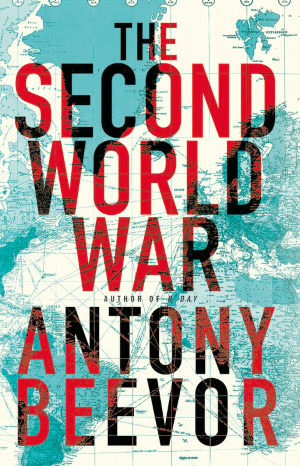
beevorEarly this year I picked up Antony Beevor’s 2012 history book The Second World War on the recommendation of Ta-Nahesi Coates (here and here), and recently I finally read it.  The book is actually somewhat complex to evaluate.  Most reviews (NY Times, Guardian, etc.) seem to have been positive but not super excited about the effort.  At first I agreed but now feel it to be an excellent book within its audience, goals, and necessary limitations.  It is certainly by far the best single-volume history of the entire war that I have encountered.

Audience

The first tough question to evaluate is who exactly is the audience for this book?  I found it to be a fast read but at almost 800 pages (excluding bibliography) it is probably a significant commitment for many people.  Beyond that, it is mired in details of dates, titles, numbers, troop dispositions, and so on.  Not getting bogged down in these while also not missing important notes or losing track of the overall thread and continuity could be challenging for younger or less experienced readers.  Similarly, those only marginally interested in the topic could potentially be turned off by its sheer length and the volume of nuts & bolts minutia.

From a different angle, those who are very interested and have read a lot about the second world war may at times be a bit confused about what they’re supposed to get out of the text.  Surprisingly given the many decades between the event and now, Beevor does actually present a number of new revelations that have only recently entered public knowledge.  But the overall text is very light on analysis and motivations, and the basic detailed history already well covered in innumerable texts and documentaries, so for those well versed in the topic it’s not always immediately clear for what or whom the book is intended.

Ground History

Eventually though I came to understand the book as a detailed ground history across the entire scope of WW2.  At that it is impressively detailed yet readable.  If you want to get or ensure you have a comprehensive feel for the military movements across all of the half dozen or so major fronts in the war, this is the text you want.  In this way it’s useful for both those unfamiliar with the topic, and those who want to cement their knowledge.  Beevor himself notes that he wrote the book because, having written several other books about particular battles and topics, he thought his own knowledge was patchy.  As one example for me, though broadly familiar with the fighting and politics in China, the overall picture and the specifics of the intense jockeying for post war positioning between the Nationalists and the Communists is much more clear now.

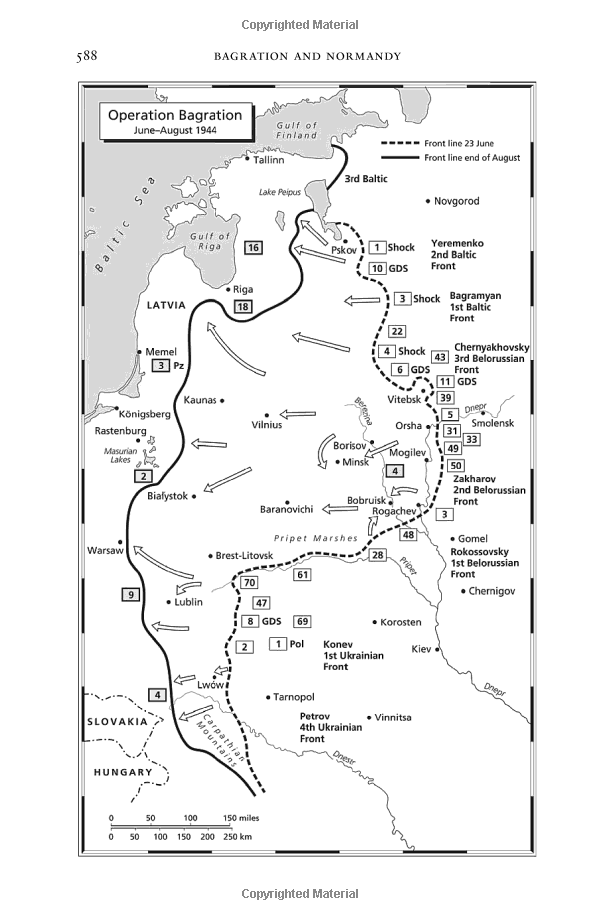
That leads directly to the first place the book really excels.  It covers the whole war.  From an American perspective this makes it a particularly useful text.  All of the early movements in Czechoslovakia and Poland, the critical nature and immense scope of the Eastern Front, to the Italian and African campaigns, to the overlooked but long-term incredibly important China and Southeast Asian theaters, everything’s covered.  This isn’t a typical American history in which the war is largely fought and won over 4 days (e.g., Pearl Harbor, D-Day, Iwo Jima, Hiroshima).  The Battle of Britain, for example, gets a reasonable but notably succinct summary, which makes much sense upon reflection:  That conflict’s extremely well covered elsewhere and, though immensely important, actually very simple and straightforward in the basics.  In contrast, a tremendous number of pages is spent on the sprawling, complex, and ultimately world defining Eastern Front, a theater that has little detailed recognition and understanding among western audiences.  As another personal example, though relatively very aware of the scope of Soviet and German losses, and the sheer brutality of that conflict in particular, the book adds a layer of general understanding to the overall sweep and movement of the war.  It also clarifies a number of details, e.g., the final Soviet and US run-in to Berlin, a relatively small but ultimately very consequential period of time of which it turns out I did not understand the basic mechanics well at all.

Map from the text of a late war overarching Soviet push.

Map from the text of a late war overarching Soviet push.

To the point about brutality, that’s where the book really excels.  It’s important to recognize and understand that the text comes from classical, traditional military histories of major conflicts.  Though the coverage is reasonable for the book’s purposes, Beevor only tangentially discusses the politics, economics, and scientific enterprises that are the real heart of the issue in the war.  If you’re looking directly for analysis, contextual understanding, and long term consequences, as I was going in, this is not that text.  It starts from a focus on armies and generals and combat and stays focused on that kind of ground level details of the war.

But Second World War goes well beyond that class of ultimately unenlightening typical military narrative in being very comprehensive about what it means to be a “detailed ground history across the entire scope of WW2.”  There is extensive discussion about the suffering of individual soldiers and the conditions they fought under.  More importantly, despite the book’s military history origins, Beevor places equal focus on the devastating, incomprehensible levels of civilian suffering, elevating the text well above most generic WW2 histories.  Both abstract issues and numbers as well as a wide array of personal letters and diaries are used to document that aspect of the war as extensively as the military maneuvers.  It documents well topics like the courses of both Nazi and Soviet genocide; unbelievable losses of life to famine in China and Southeast Asia; and the awful, unrelenting destruction and poverty of the churned middle ground between Russia and Germany.

The book also puts special attention to the near universal suffering and persecution of women on all fronts.  To a large extent this is not a revelation to any who have read about or are otherwise familiar with events like the Rape of Nanking, or, indeed, has thought at all about the likely consequences of an extended, to-the-death, wide scale war, particularly one with heavy racial and nationalist undertones.  But this is a topic still under-discussed and poorly recognized, e.g., among all the pop fans of WW2 enabling the thriving history-entertainment industry.  Beevor also pushes that understanding into all theaters and forces the unavoidable conclusion that this is not an issue of ad hoc atrocities or confined to just one region.  The text makes clear both the overwhelming extent and horrifying nature of female suffering across the entire worldwide conflict, as well as its execution as a systematic, condoned, even organized undertaking.

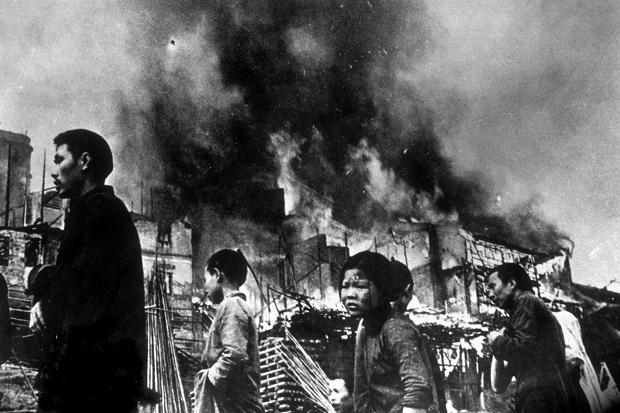
Chinese refugees in Chungking, wrecked capital of the Nationalists.

Chinese refugees in Chungking, wrecked capital of the Nationalists.

Details and Revelations

As has been widely publicized in other reviews, the book does work to raise popular awareness of a number of relatively new revelations.  Some of these include:

  • A somewhat notable assassination of a Vichy French official, not previously understood to be organized by the British and US intelligence services.
  • The treatment of Soviet women by the Soviet army itself, the uncovering of which I believe comes largely came from Beevor’s own work for his more focused book Stalingrad.
  • Most talked about, the overwhelming effect of starvation on Japanese forces—60% of all casualties—and the consequent systematized, rampant cannibalism among its armies.  This has only recently been captured by Japanese historians after being suppressed by the Allies in order to not traumatize families of POWs at home.

Just given the breadth of the material, the book necessarily has to make concessions to brevity.  Many reviews have noted that compared to Beevor’s previous books there is less emphasis on personal accoutings.  Still though, I think there is a good amount of that, with many of the scenes, particularly of refugee and other civilian suffering, told through diaries and letters.

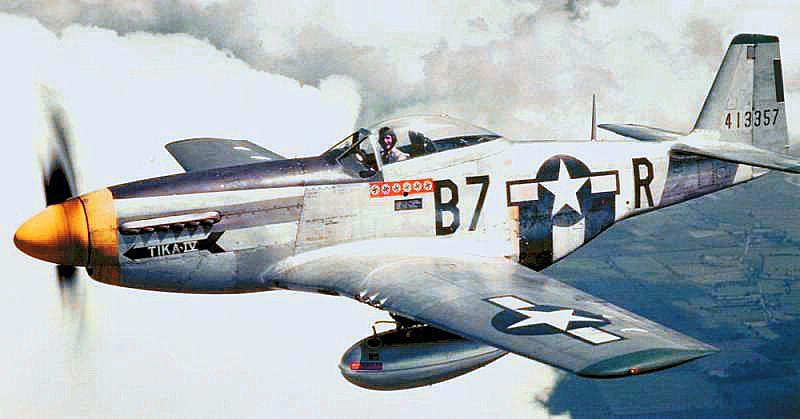
Similarly, in many ways the book relies a fair bit on extensive knowledge of the war.  For example, there’s a line in a meeting with Churchill about Stalin’s blue pencil that has no resonance without knowing his original role as an editor.  As a more important example, I’m not sure the book adequately relates the technical limitations forcing the Allies’ unescorted bomber tactics in Europe until the development of the Mustang fighter with its combination of range and capability.

One of the most important engineering efforts ever...  Still not as powerful as Stalin's blue pencil.

One of the most important engineering efforts ever… Still not as powerful as Stalin’s blue pencil.

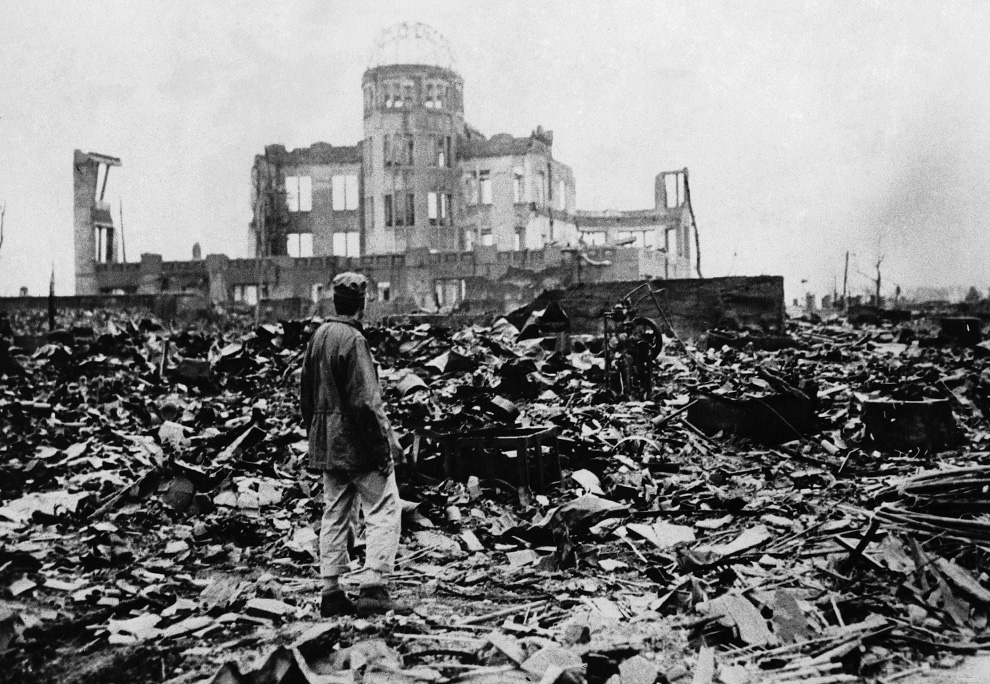
Some of these choices though come directly on the book’s focus on the ground, and are reasonable once you’re in line with that approach.  For example, there’s an interesting paragraph or so about driving in the London blackout, and the thousands of pedestrians killed by vehicular accidents in its early months.  In contrast, the massive, world-changing Manhattan Project appears almost out of nowhere only when the Enola Gay finally takes off on its fateful mission, with just a few references beforehand as it came up in conferences among the Allied leaders.

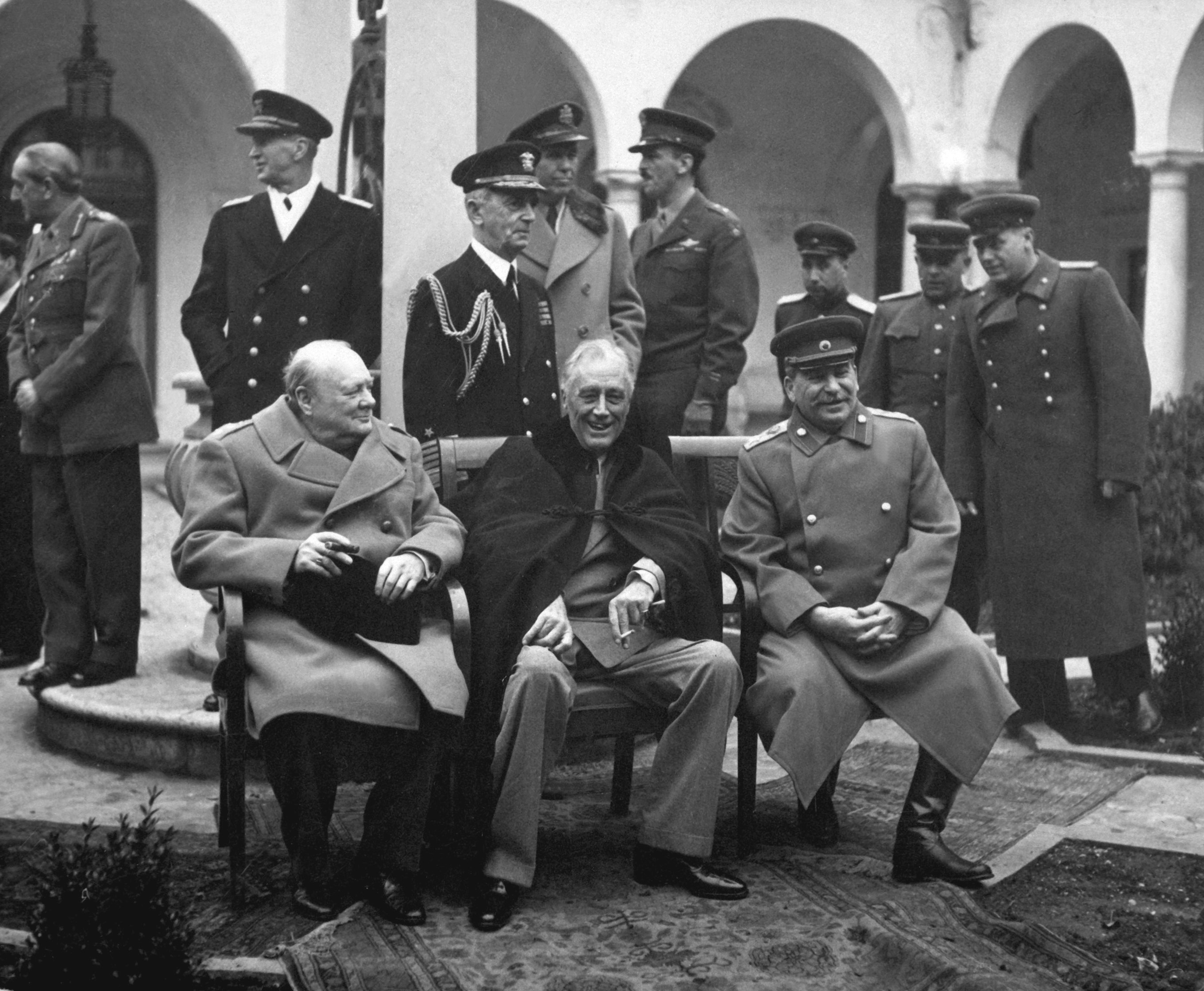
To me, among the more notable non-ground details Second World War does make within its comparatively limited focus on the leadership and behind-the-scenes politics, are those about Roosevelt.  Beevor paints a clear picture of his anti-Imperialist leanings, capturing how that defined US priorities, frustrated Churchill, and would have resulted in an immensely different world view had he lived longer.  For example, it discusses in passing references how he was staunchly against the French resuming occupation of Indochina (Vietnam) after the war.  Though it’s hard to predict how that would change history, clearly it would do some immensely.  In a related vein, it is also made clear just how poorly Roosevelt understood or cared about post-war implications, how fixated on them Churchill was—often in strongly Imperialist tones—and how masterfully Stalin and Mao Zedong out-maneuvered both of them at that shadow conflict.

"We're getting played, arent't we?  Hilarious!"

“We’re getting played, arent’t we? Hilarious!”

Maps & Endnotes

As a minor note, the first half or so could use a few more maps and diagrams, but I attribute that to Beevor being English and assuming more familiarity with European geography than I, and presumably most Americans, possess.  By the time things get really hairy and entangled in the second half of the war, much of it in the less familiar eastern Europe and Pacific, there are notably more diagrams complementing the text.

On another minor note, the book employs extensive endnotes rather than footnotes.  I assume this was done to make the book seem more pop history and accessible to people flipping through in a bookstore.  It’s very unfortunate however as it leaves you constantly wondering “Who said that?” and “Where is he getting that from?” for both quotes and newer revelations, giving the book just a slight feel of unscholarlyness and speculation that it doesn’t deserve.

Summary

All in all, I highly recommend Beevor’s The Second World War, contingent on being clear or what the book is trying to do and who it’s for.  It’s not a light history, and probably requires either a fair amount of motivation or an experienced reader; e.g., I have mixed feelings about recommended it for typical high schoolers.  Little time is spent on politics, economics, context, or consequences.  Similarly, there is little analysis or direct relation to modern events.  Beevor himself is careful in interviews to proscribe against the popular inclination of politicians and pundits to draw untrue and misleading parallels to WW2.  But the book is very good for those with a limited understanding of the basic mechanics and movement of the war, or those who want to ensure their understanding.

Beyond that, the book is excellent at is portraying the “truth” on the ground.  Most notably, it is faithful to and evenly balanced across the entire scope of the war—from the Pacific to the Eastern to the Western fronts—as well as both the military and civilian effects, particularly for women.  The scope and abstract numbers almost prevent a felt understanding, but there is enough detail and personal accounts to ensure a tangible picture of the colossal scale of human suffering entailed.

Ultimately that presentation is worthwhile in its own right, and enables the kind of thought and analysis from which the book largely shies away.  For example, through much of the text the US and English come off fairly well in ethical terms, with most of the atrocities, particularly mass rapes,  enacted by the Japanese, Germans, Soviets, and French.  Especially at the end though there are disappointing lapses by US forces in the occupation of Japan.  Combined with the deep picture from the rest of the text of the relatively limited contact up to that point between US forces and civilians, particularly non-Europeans, it is difficult to not then take that behavior as near-universal and those two Allies’ comparatively clean records coincidental rather than actually exceptional.

That is exactly the sort of observation a good raw history should support.  Second World War largely refrains from imposing its own conclusions, but does enable that kind of thinking across a number of topics: Civilian suffering, modern total war, justification for the atomic bombings, post-war geopolitical consequences, and so on.  For that I highly recommend it.

Hiroshima.

Hiroshima.